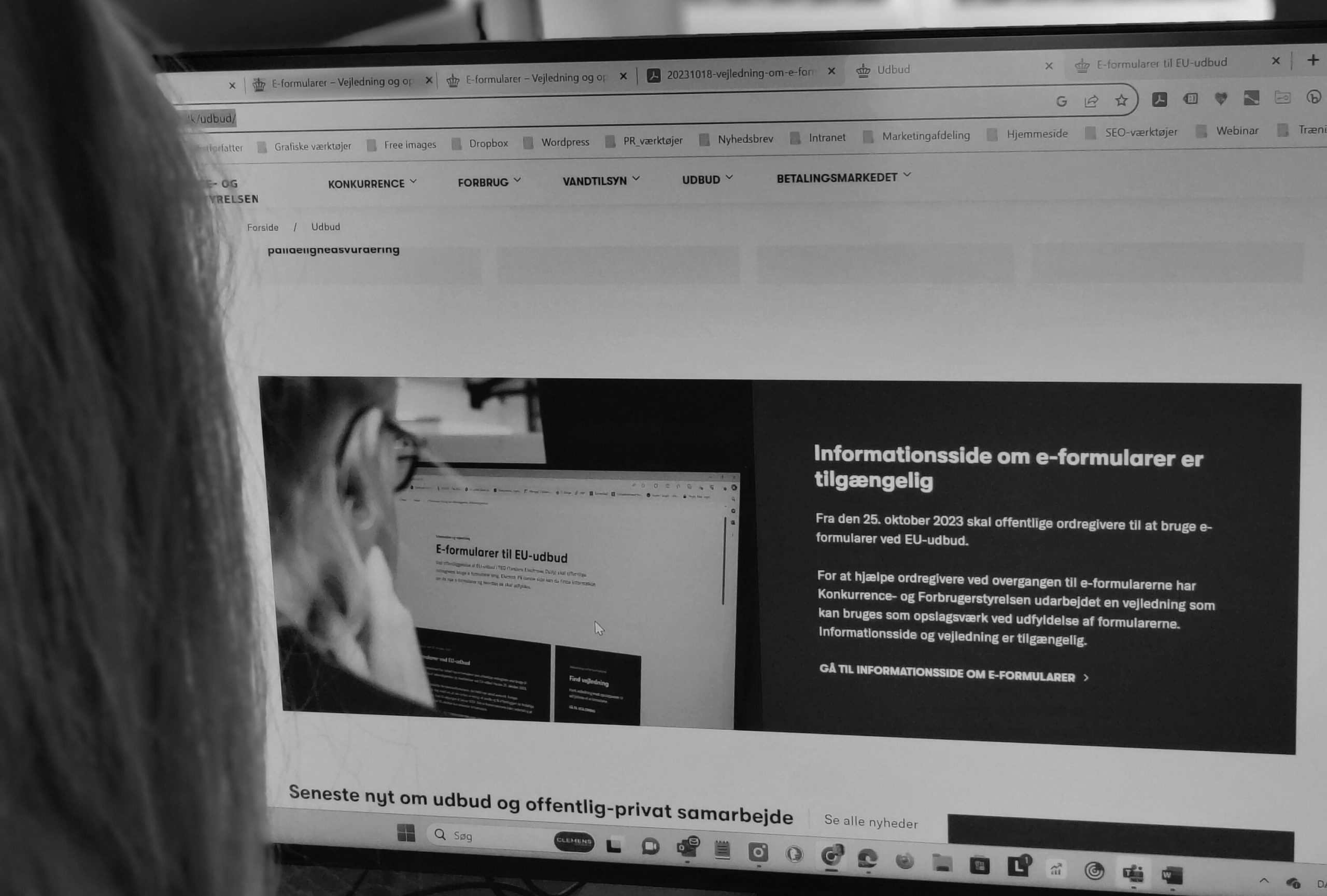
Are you up to date on the new e-forms in EU tenders and their impact on EU tendering?
October 25, 2023 is an important date for anyone involved in EU procurement. From then on, it became mandatory to use e-forms to publish procurement information.
The reason for the switch
The move to e-forms is a progressive step that builds on existing procurement rules. What changes is the way information is collected and shared. It's meant to simplify things for those who handle procurement processes. It provides more flexibility and efficiency for both contracting authorities managing EU tenders and tenderers. Both will experience a more streamlined collection and sharing of information.
New features in the e-forms
The new e-forms include specific changes and additions that contracting entities should be aware of. For example:
- Maximum value on framework agreements: Now you can specify the total maximum value for the entire framework agreement or for individual subcontracts.
- EU funding: There is an option to enter specific codes for EU-funded programs.
- Green Tenders: A new field asks procurers to indicate if the tender contains green procurement criteria.
The new system, eForms, is part of a comprehensive update of the TED platform, known as "TED 2.0". Although eForms is currently available in a test version and IT bugs have been reported, it is expected that all contracting entities will switch to the new e-forms after the transition period ending October 24, 2023.

Help with the transition
The Danish Competition and Consumer Authority has published a comprehensive guide on the use of the new e-forms, offering contracting entities a detailed insight into the new requirements and procedures.
You can find the guide here: E-forms - Guide and reference work for filling in e-forms in EU tenders
CLEMENS believes
The move to e-forms in EU procurement is not just about technology; it's a strategic improvement to make procurement processes more efficient and accessible.
Further information and guides can be found on the website of the Danish Competition and Consumer Authority.
FAQ
E-forms are digital forms used to collect and publish information about tenders in the EU. They are designed to make the process more efficient and user-friendly for both contracting entities and tenderers.
With e-forms, you answer specific questions instead of simply filling in predetermined fields. This makes it possible to generate more accurate and relevant documents for publication.
The new e-forms came into force on October 25, 2023, after which all public contracting entities must use them in the EU tendering process.
Further information, guides and resources can be found on the website of the Danish Competition and Consumer Authority.
Switching to e-forms is essential to ensure procurement processes are compliant with EU legislation. Omission can lead to legal and administrative complications.
Yes, the new e-forms have specific fields that allow information to be entered for complex tenders, including the maximum value of the framework agreement and details of subcontracts.
The e-forms now include fields to enter specific codes and identifiers for EU funding programs that finance the contract.
The e-forms have specific code fields that require contracting entities to indicate if the procurement procedure includes environmental or sustainable criteria, supporting the EU's green procurement objectives.